
After years of guiding guests to Africa's greatest safari destinations, Rhino Africa Travel Expert Allison Bothma thought she knew exactly what made a memorable safari. Then Botswana sharpened her perspective. Between the shimmering Makgadikgadi Pans and the life-filled waterways of the Okavango Delta, she learnt that the wild's greatest stories aren't always the loudest or the largest – they're often the ones found in the spaces between them. These are the five lessons she brought home.
Lesson One: Looking Differently
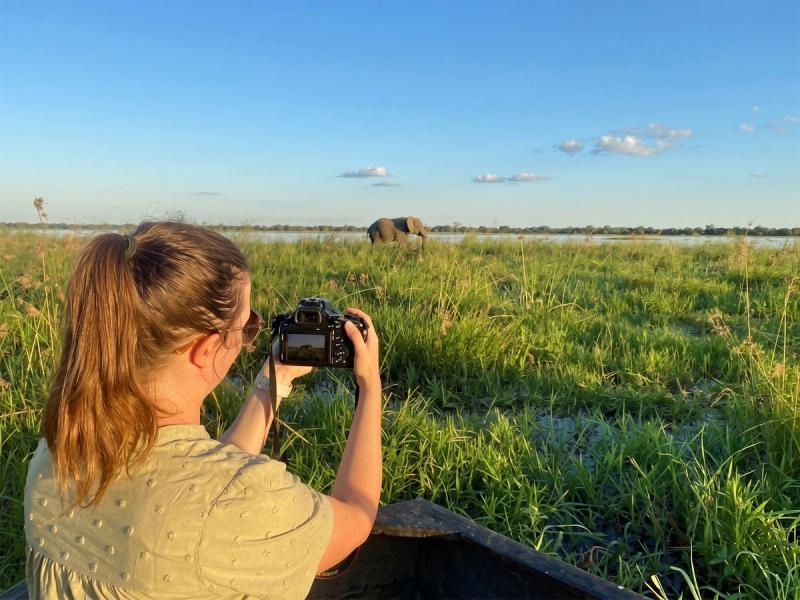
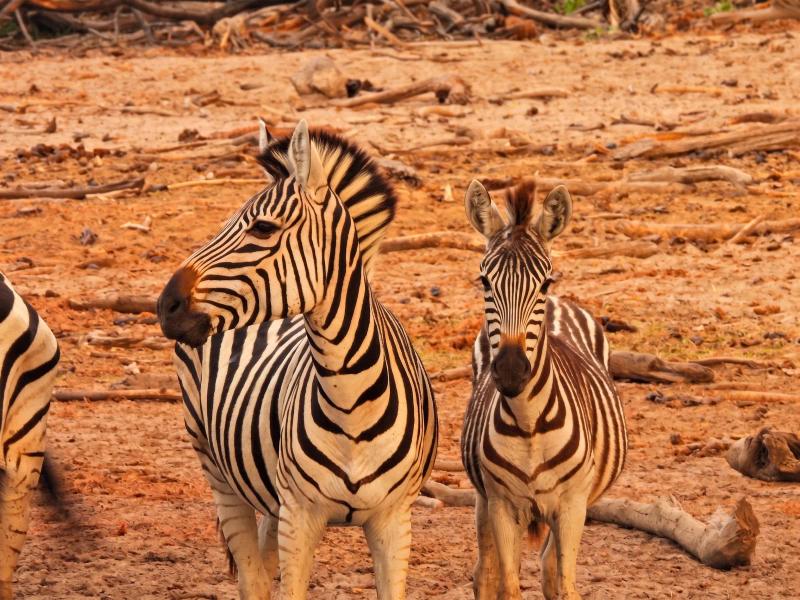
The journey began in the Makgadikgadi Pans, where salt flats stretched endlessly towards the horizon, and immense herds of zebra drifted across the open plains. It was here, in a landscape defined more by space than by wildlife, that she picked up a camera for the very first time.
Until then, Allison had always travelled with her phone, taking the occasional snapshot along the way. Borrowing Rhino Africa's Nikon Coolpix P950 felt like little more than an opportunity to bring home better photographs.
But she didn't expect it to completely change the way she experienced safari.
"The whole time, I was just trying to capture shots I'd never taken before."
Looking through a viewfinder demanded something her phone never had. She began paying attention to the direction of the light, the balance of a composition, and whether a scene might become something entirely different if she simply waited another moment.
Photography gradually became less about recording what was in front of her and more about giving it her full attention.
Instead of searching for wildlife, Allison searched for perspective. The sweep of shadows across the pans. Clouds gathering above an otherwise empty horizon. It was all a work of art, and the camera could preserve this unique moment in time.
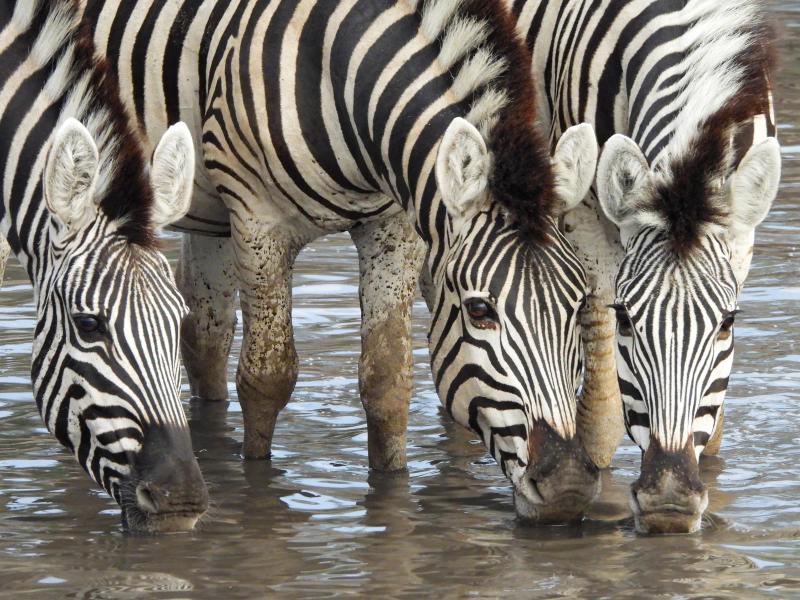
A zebra sighting became a study of pattern. A foal sheltering beside its mother drew her eye as much as the herd itself. At a watering hole, three zebras lowered their heads in near-perfect symmetry, their reflections completing the composition on the still water below.
And with it, the familiar had become fascinating again.
Lesson Two: Nothing Is Too Small
By the time Allison reached the Okavango Delta, the camera had become a constant companion. But the photographs were no longer the point.
"I focused more on the smaller things. It was fun to sit back and appreciate them."
Gliding silently through narrow channels by mokoro, Allison discovered one of the calmest safaris she'd ever experienced.
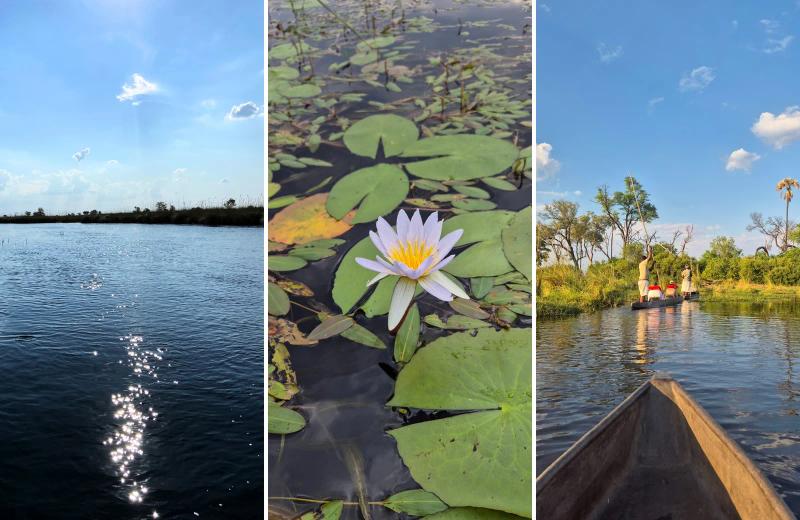
Dragonflies skimmed the water before settling on reeds. Tiny frogs clung to papyrus stems. Water lilies drifted through the channels while delicate wildflowers brought unexpected colour to the floodplains.
None of them were headline safari moments, yet they became some of her favourite photographs.
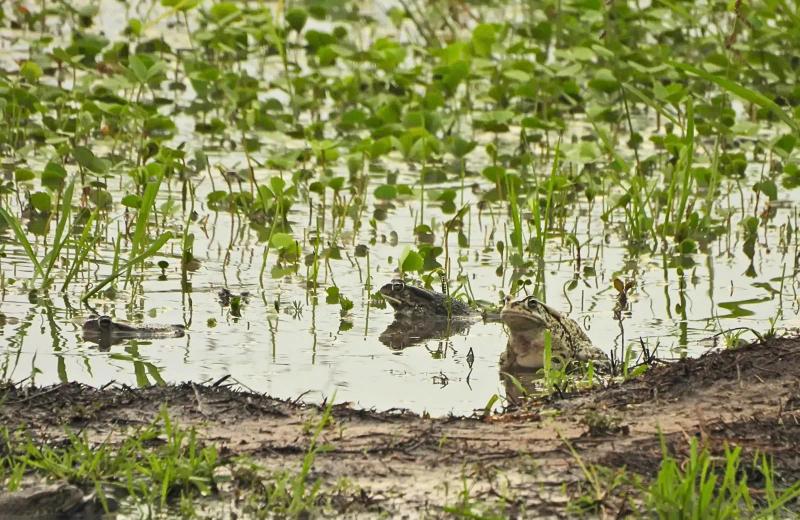
Asking questions transformed the landscape. Guides pointed out water pistols – tiny flowers that release droplets when gently squeezed and have long been used by local communities as a remedy for eye infections. Plants Allison might once have walked past suddenly carried generations of knowledge.
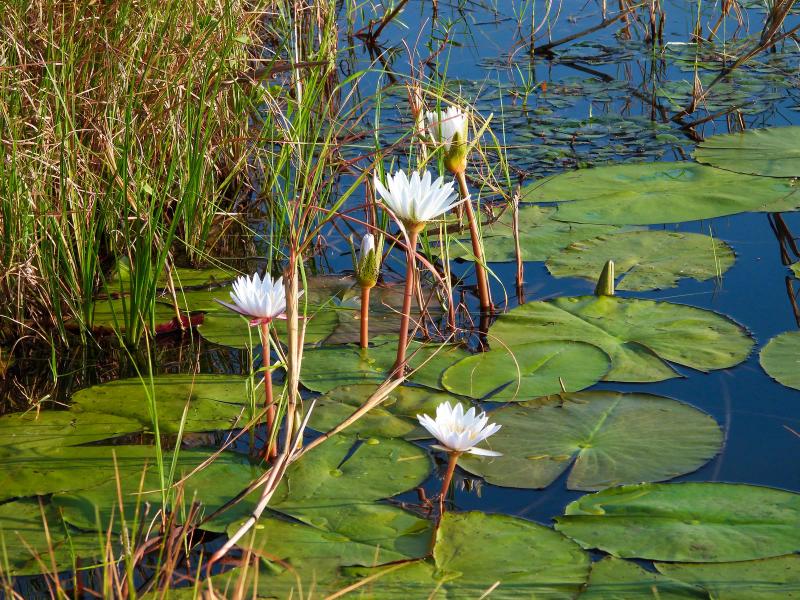
That lesson deepened again on foot. Walking beside their guide, Noah, the focus shifted from spotting wildlife to reading the landscape itself. Noah would kneel beside almost invisible tracks pressed into the sand, reading where wildlife had travelled, how recently it had passed and something of its behaviour.
The wilderness wasn't empty at all. In fact, it was always speaking.
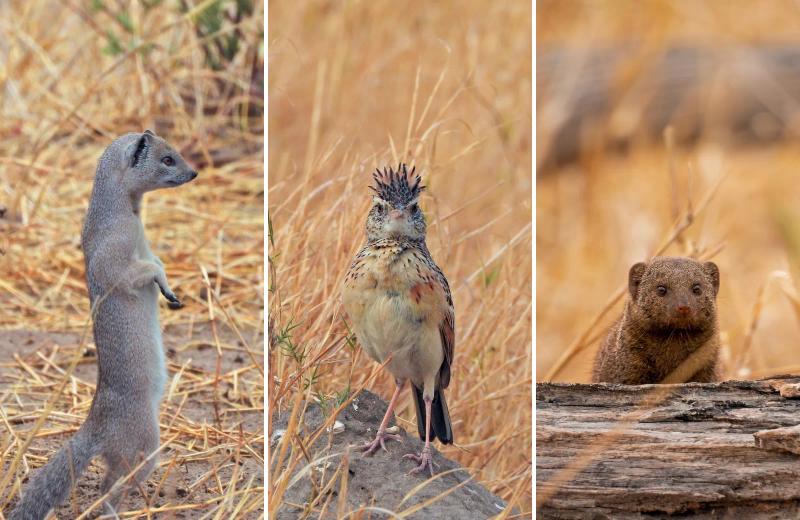
Noah delighted in the details. He introduced Allison to the Small 5, lifting an antlion from its tiny trap in the sand and revealing the remarkable creatures that so often live in the shadow of their famous namesakes. It was the sort of moment that would have passed unnoticed, yet here it felt just as memorable as any lion sighting.
The smaller mammals now appeared as mighty sightings, from dwarf mongooses, tree squirrels, and bush babies.
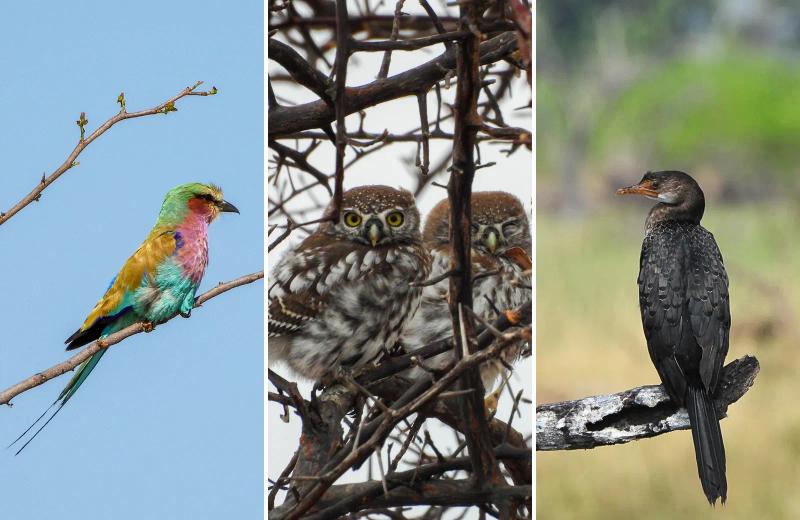
And the perspective extended skyward.
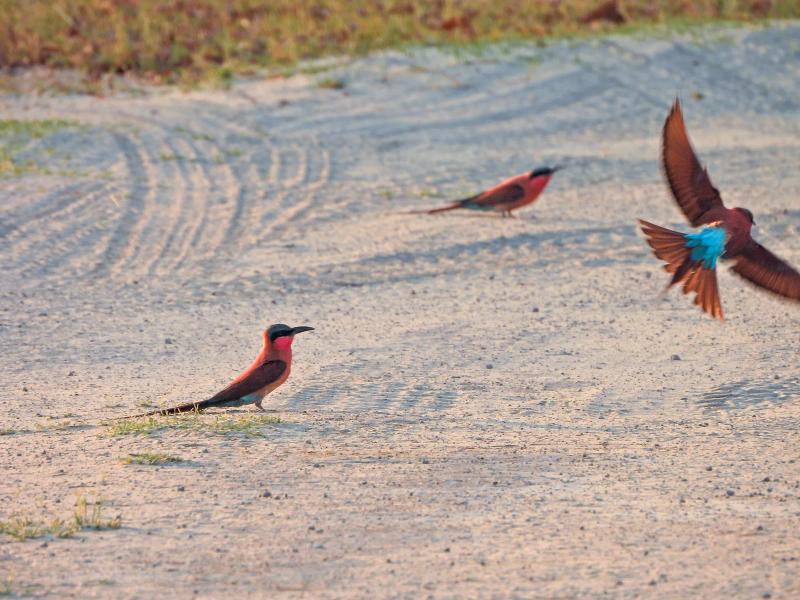
Botswana's waterways are alive with birds, and Allison could now shift her focus to wings as she once had to paws. African fish eagles called across the Delta each morning, kingfishers hovered above narrow channels before plunging into the water, and flashes of lilac-breasted rollers lit up the floodplains with impossible colour.
But one flock in particular became impossible to forget.
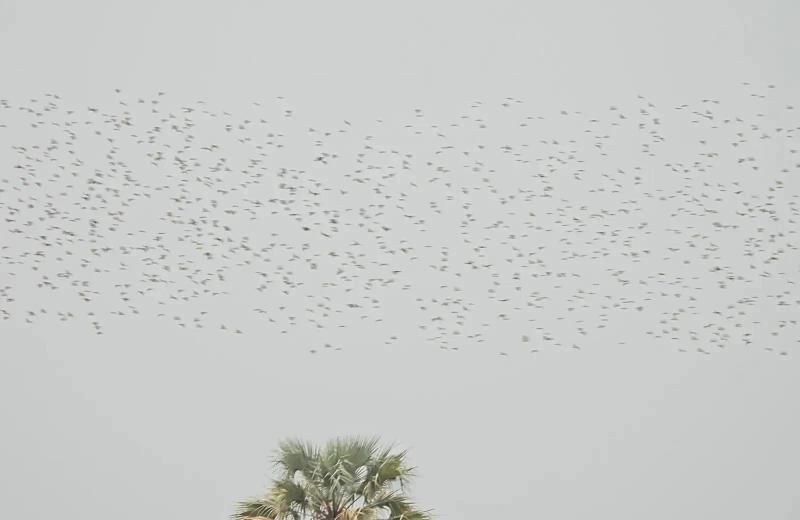
Hundreds of Quelea birds gathered along the roadside before lifting into the air as one. Crimson beaks caught the afternoon light while flashes of white shimmered beneath their wings. They wheeled effortlessly above the floodplain before settling again in near-perfect synchrony, only to repeat the performance moments later.
"It was like a dance."
Rather than instinctively pressing the shutter, Allison waited. She watched the flock rise and fall, learning its choreography before lifting the camera.
Lesson Three: Watch Before You Move On
By now, Allison had stopped measuring a sighting by the wildlife itself. Instead of asking, “What are we looking at?”, she started wondering, “What's happening here?”
"This trip was all about the different behaviours and interactions that you don't normally pick up on.”
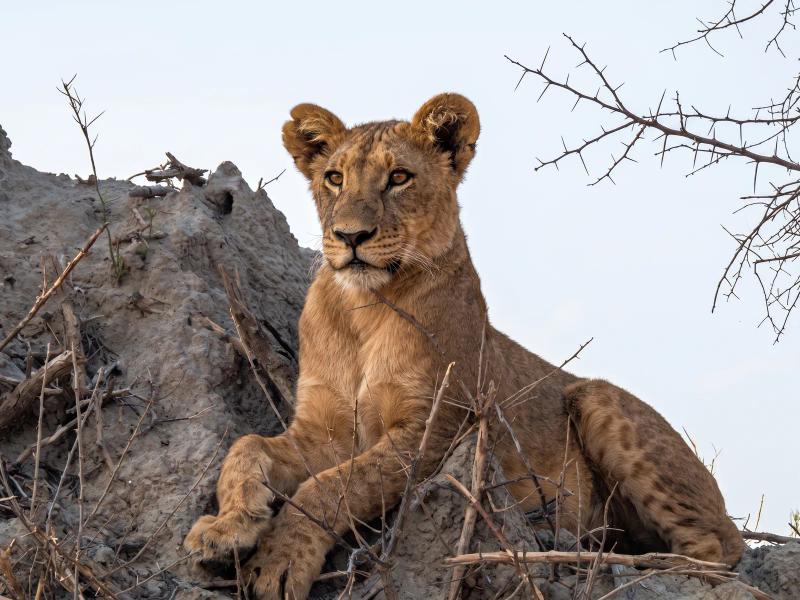
Close to one of the camps was a pride of lions. Allison encountered the same pride over several game drives, yet no two sightings felt alike. Each revealed another glimpse into the lions' lives.
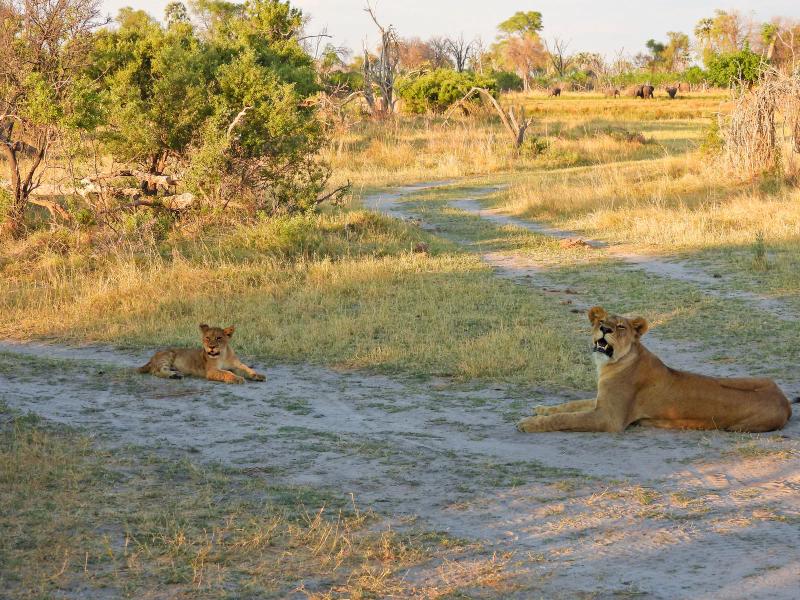
One afternoon, a lioness lay stretched across the sandy track while her cub wandered a few metres away. There was no hunt. No dramatic chase. Just a mother keeping watch as her cub tested the boundaries of independence.
One evening, Allison noticed the cubs growing bolder, tumbling over one another, pouncing from termite mounds and baring tiny teeth in exaggerated displays of courage.
At first glance, it looked playful. But to the guides, it was practice. Every chase, every ambush, and every wrestling match was a rehearsal for survival.
"It was amazing hearing the guides explain what we were actually watching. Without them, I would've just thought the cubs were playing."
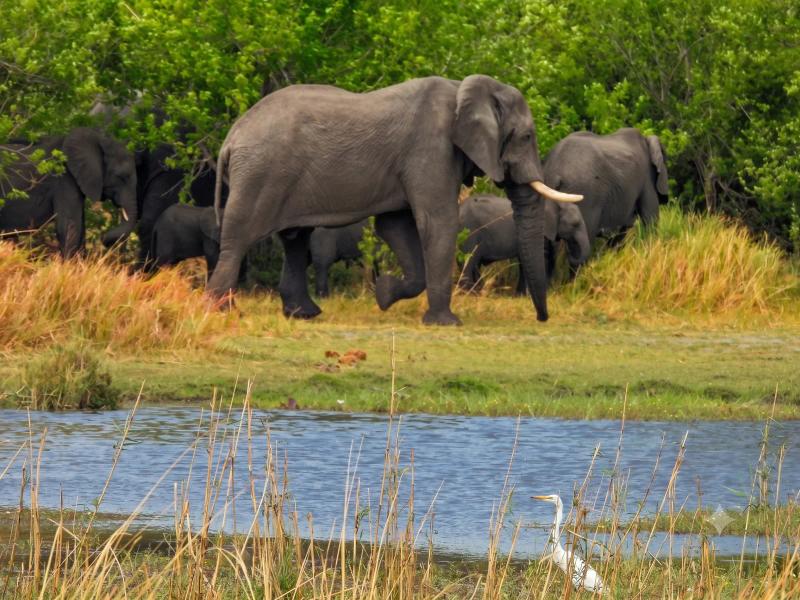
The same lesson unfolded among Botswana's elephants.
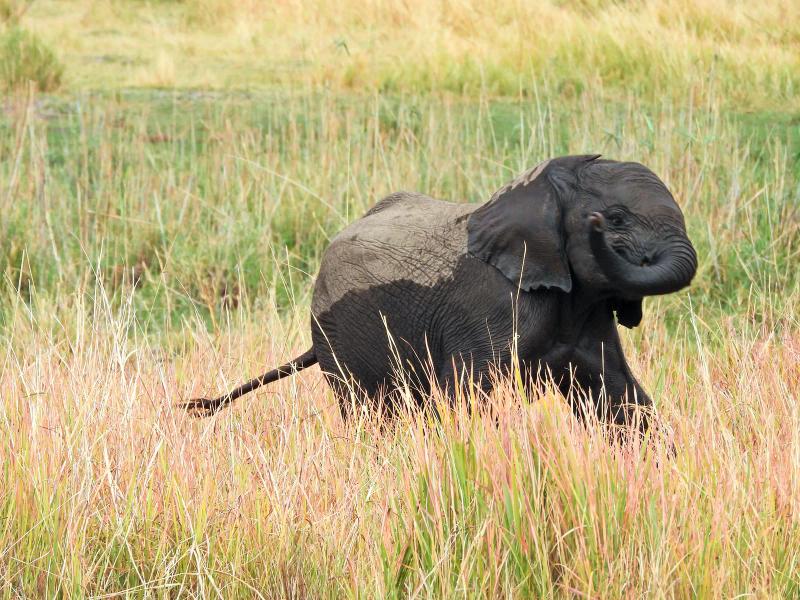
During Allison's visit, breeding herds were everywhere. Mothers stood protectively between the game-drive vehicles and their calves, ears spread wide in quiet warning, while adventurous youngsters wandered just far enough to test their independence before hurrying back towards the safety of the herd.
"You could sense the authority of the mothers. Then you'd have the teenage boys trying to show off, and the little ones running back to their moms. It was amazing to watch."
The interaction lasted only moments. A lifted trunk. A mock charge. A calf pressing gently against its mother's side. Yet those fleeting interactions said more than any checklist ever could.
Allison had photographed elephants before. This time, she was photographing relationships.
Lesson Four: Take Nature As It Comes
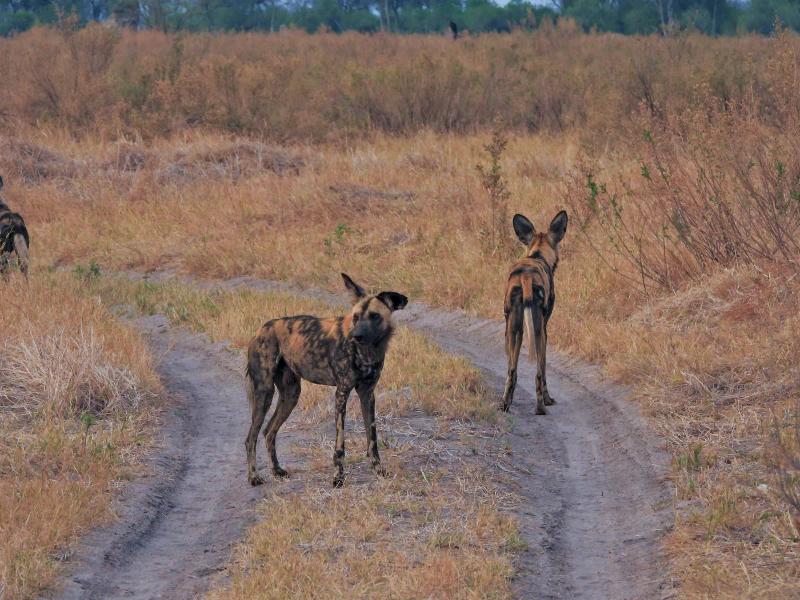
By the time they set out that morning, Allison no longer measured a game drive by what she hoped to see. So when Noah noticed the African wild dogs ahead behaving differently, she trusted him to follow.
Within moments, everything changed.
The dogs, so playful only minutes before, became completely focused. Noah made a split-second decision to follow them, and the vehicle lurched forward as the chase unfolded through the bush.
"It happened so quickly. Experiencing a kill is amazing… but difficult to watch.”
For the first time since picking up the camera in the Makgadikgadi Pans, Allison never thought to lift it. There would be no photographs of this moment. Some experiences ask to be witnessed before they're documented.
The hunt stayed with her long after it was over because it revealed something she'd spent the entire trip slowly beginning to understand. Life in the Delta wasn't made up only of beautiful sightings and perfect photographs. It was built in tune to an ancient rhythm, one in which every life eventually became part of another.
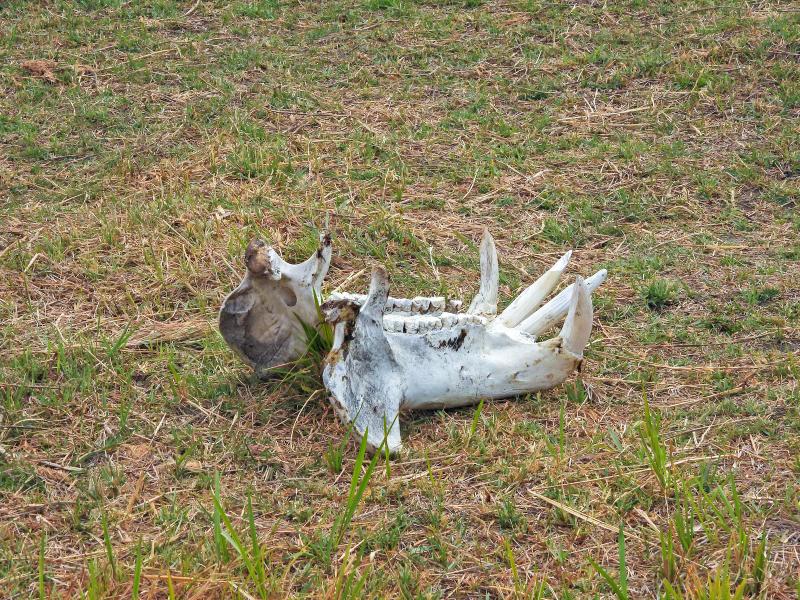
Scattered beside the game tracks were weathered skulls and sun-bleached bones, the remains of wildlife whose stories had already come to an end. Instead of turning away, Allison was drawn to them. She photographed skeletons almost as often as living wildlife, fascinated by what they represented.
They weren't symbols of loss, but reminders that nothing in the wilderness truly disappears.
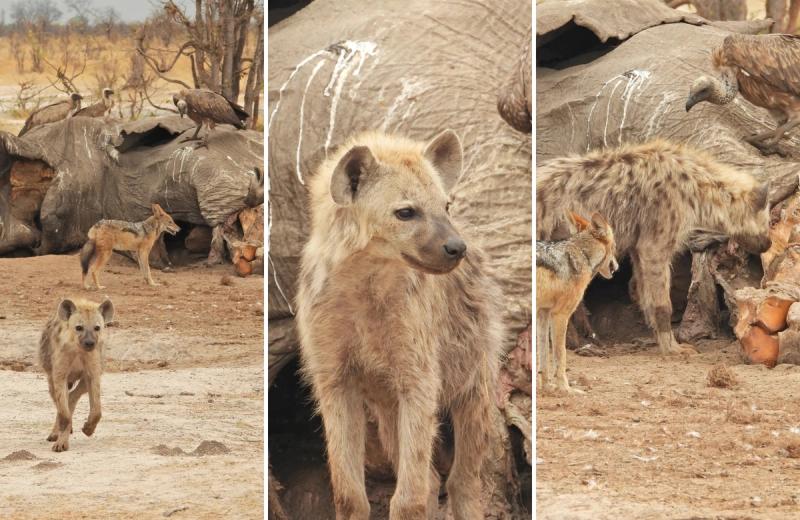
The moment that brought everything together came beside the enormous carcass of an elephant.
Against a backdrop of bare, weathered trees, hyenas fed cautiously while vultures waited in the branches above. A jackal darted forward whenever it saw an opening, retreating again just as quickly. Each animal seemed to understand its place, watching the others as carefully as they watched the carcass itself.
Standing there, she wasn't looking at death. She was watching life continue.
Lesson Five: Bring Something Home That Lasts
Since returning home, Allison has only continued to hone her newfound passion.
“After that trip, I went and bought my own camera because I fell in love with photography."
Now, Allison has never gone on safari without her camera – a sentiment echoed by many travellers who embark on an African photographic safari.
If Allison could offer one piece of advice, it would be to let Botswana set the pace.
Resist the urge to move on too quickly. Stay with the lion after the photograph has been taken. Watch where the elephant herd goes next. Ask why the birds suddenly lift from the reeds. The moments she'll remember most weren't the ones she chased, but the ones she stayed long enough to understand.
"Botswana changes you. You leave looking at nature differently."
Ready to Bring Botswana Into Focus?
If Allison's experience has inspired you to slow down and see Botswana through a different lens, our Travel Experts can help you plan a journey shaped around the same sense of curiosity.
Whether photography is already a passion or you're simply looking to experience the wild more thoughtfully, get in touch with us, and we'll help you find the Botswana that's waiting beyond the checklist.